How Coach Ron Jacobs revolutionized Philippine basketball
 Jay P. Mercado
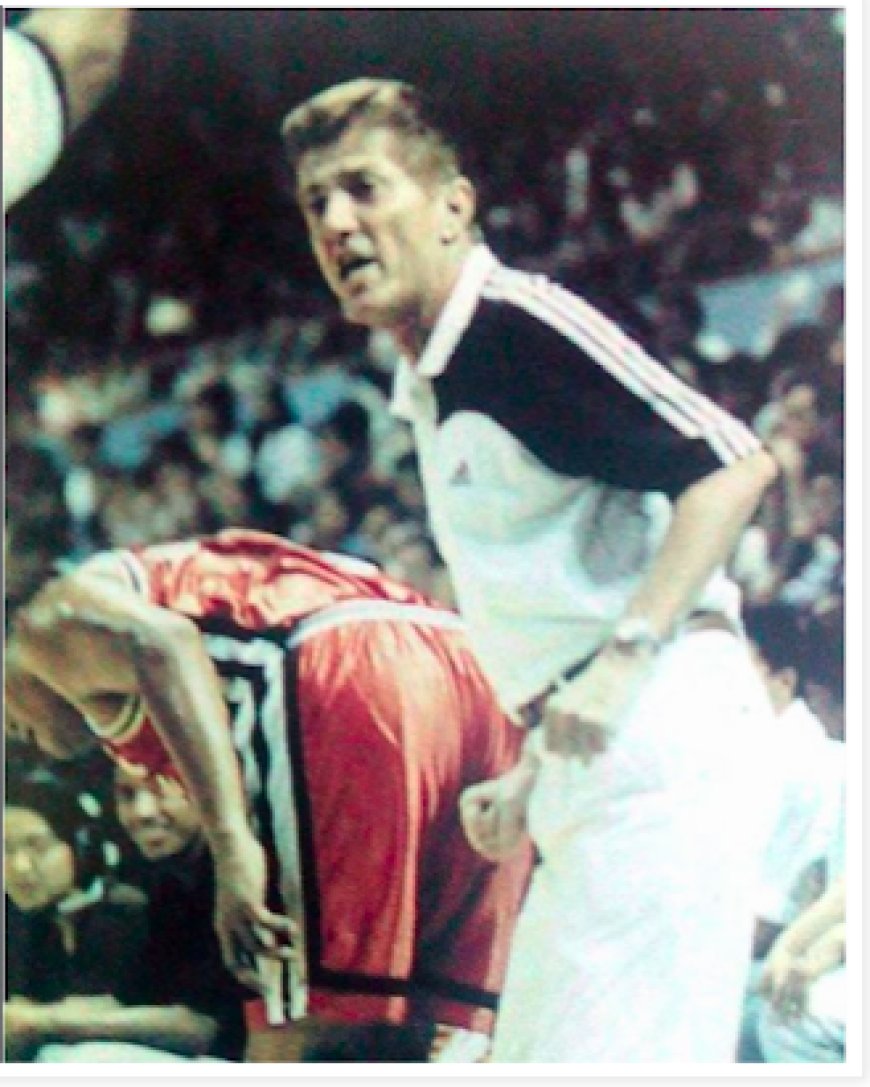
(this article, originally posted on The Sports Potpourri website, is in celebration of Jacobs' 83rd birthday tomorrow, December 27)
When Ron Jacobs was tapped by then project director for basketball, Ambassador Eduardo Cojuangco, Jr., to take over the running of the PHL national team, it was a bold step that no one expected. At that time, Filipino basketball fans believed that the best players from Asia were the Filipinos handled by the best coaches in the region. Unfortunately, because the best players were at the PBA and pro players weren't allowed to suit up for the national team at that time, the Philippines were good for only 4th or 5th in the region.
Jacobs was taken in alongside another American coach, Ben Lindsey, underscoring the amount of investment Cojuangco made in order to reclaim basketball supremacy in Asia. A spat between Jacobs and Lindsey led to some internal wrangling within the group and Jacobs eventually was taken in to run the team.
Cojuangco appointed Jacobs to run his program that involved the formation of a national team made up of Americans to be naturalized, Fil-Foreigners, and homegrown talents. Since the players available in the country were made up mostly of amateur standouts from the MICAA and the collegiate leagues, the need to fast-track the development of the amateur players was a priority. Hence, Jacobs decided to bring in young Americans who were willing to play for the PHL. Fil-Americans Ricardo Brown and Willie Pearson were also tapped, the former a draftee of the Houston Rockets and fresh from Pepperdine University while the latter a standout from Chaminade University.
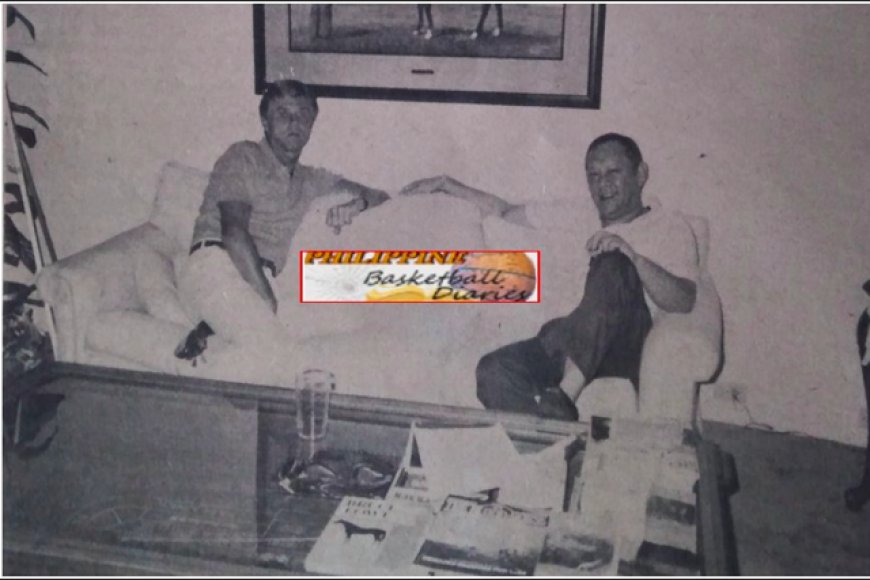
The First NCC Training Team
The first test was the 1981 William Jones Cup in Taiwan. Jacobs formed a 17-man team led by Brown and Pearson, with MICAA standouts Bokyo Lauchengco and Ricky Relosa of Frigidaire and NCAA players like JB Yango and Frankie Lim of San Beda College, Itoy Esguerra of Letran, Manny Victorino of Jose Rizal College and Joel Banal of Mapua being recruited. Also taken in were foreign players Michael Antoine, Steve Schall, Mike Santos, Willie Polk, Bruce Collins, Eddie Joe Chavez, Jeff Moore and Dennis Still. Only Yango and Lim were included among the homegrowns in the final 12-man roster. Moore and Still both played for Jacobs at Loyola Marymount University, a Division I NCAA team where Jacobs won collegiate coach of the year honours in 1980. Hence, his familiarity with these players were evident, as both eventually stayed on with the national team until 1986. The tournament saw the Philippines romping away with the title, beating teams like the United States, Sweden, France, New Zealand, two Taiwanese teams and Canada.
The championship was huge, considering the quality of the opposition. But the reception to the team was quite lukewarm as many Filipinos felt that it was Team USA that won the title instead of the Filipinos. Only Brown really stood out among the Filipinos for the team, being the starting PG, and was even named part of the Mythical Top 10 of the Jones Cup alongside Schall and Still. The homegrown talents were benched most of the time as Jacobs' intent was not just to win the title but to dominate. They swept the tournament with an immaculate 7-0 card.
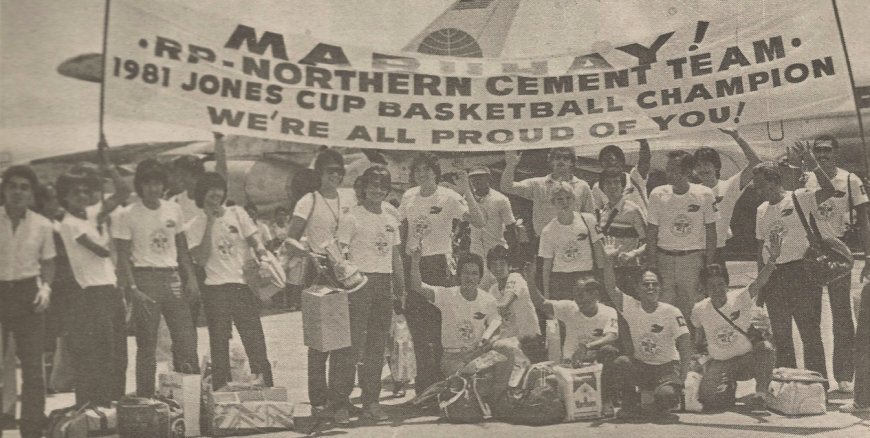
Because of the lukewarm response from the fans, Cojuangco decided to disband the team and made Jacobs select a couple of Americans to beef up the pool. Jacobs opted for Still and Moore while retaining Fil-Ams Brown and Pearson. Brown went on to play for the La Salle Green Archers while Pearson suited up for the Arellano Flaming Arrows in commercial leagues like the Philippine Interclub and the National Seniors.
Winning the Asian Youth title
It was in 1982 when Jacobs finally found genuine acceptance from the fans when he piloted the Philippine Youth team in the Asian Youth competitions held in Manila. The tournament was for players who were 19 years old and below although it was widely known that some of the players that suited up were overaged. Jacobs formed a 12-man All-Filipino team from different teams - Hector Calma of Adamson and later, with Solid Mills and Bax Jeans in the MICAA, Louie Brill and Elmer Reyes of San Beda College, Richard Mendoza, Jong Uichico, Jun Tan, Alfie Almario, Teddy Alfarero, Derrick Pumaren and Tonichi Yturri of DLSU, Rey Cuenco of Arellano and Leo Austria of Lyceum. Yturri was a late addition for the team, as starting center John Copada of University of Manila Hawks got injured a few weeks before the tournament. With the Araneta Coliseum packed by 25,000 fans in both the semifinals and the Finals, the Filipinos defeated arch rivals South Korea, 77-74, in a game highlighted by a near brawl. In the Finals, and with no less than then First Lady Imelda Marcos in attendance, the Filipinos demolished the seemingly invincible Chinese youth team led by Wang Libin and future China coach Wang Fei, 74-63, led by Almario's sniping from the outside, Calma's quarterbacking, and Alfarero's solid interior defense against Wang. Jacobs came well prepared with a solid game plan anchored on speed, defense and outside shooting.
The Next Pool
Jacobs understood that for fans to fully embrace the national team, he needed to have the bulk of the roster made up of homegrown talents. He formed his second national pool, recruiting top college standouts to add to the nucleus of Calma, Reyes, Uichico, Almario, Tan and Yturri as well as naturalized players Moore and Still. He brought in the likes of Alan Caidic and Jerry Codiñera of UE, Pido Jarencio of UST, Samboy Lim of Letran, and Yves Dignadice and Franz Pumaren of DLSU. Other players who were recruited included the likes of Anthony Mendoza and Al Solis of the Cebu-based Mama's Love team, Benjie Gutierrez of UST and Bong Ramos of Mapua. And as decreed by Cojuangco, Jacobs released those players that opted to sign lucrative contracts in the PBA without question. These included the likes of Alfarero, Relosa, Lauchengco, Yango, Brown, Pearson, Lim and Cuenco.
For Jacobs though, apart from Still and Moore, the key guy was Calma. He was the glue that held the team together, the one person appointed by Jacobs to run the team and serve as his outlet on the floor. Hence, while Calma may have already been lured by pro teams to turn pro, Jacobs put his foot down and made sure that they'll match whatever Calma was being offered, perhaps even more.
Jacobs then cornered the sweet-shooting Caidic and courted Lim enthusiastically. Lim was then playing for the Knights, and initially declined Jacobs' offer to play for the pool because of his commitment with Letran. Jacobs respected that so much that all the more he wanted to bring Lim into the team. When Lim was free, he immediately got the high-flying guard to play for the national team.
The 1983 ABC Debacle
A major debacle happened in the 1983 ABC held in Hongkong though. Having been assured by FIBA officials led by no less than then Secretary-General Borislav Stankovic that Moore and Still were eligible to play, Jacobs included the pair in the final roster, alongside Calma, Uichico, Almario, Reyes and company. They defeated Kuwait 78-57 and India, 90-60, in the elimination round to top Group D to enter the Final 8. A protest was filed by another country claiming the ineligibility of Moore and Still because of lack of residency. The protest was upheld and the Philippines' twin wins were forfeited, relegating them to the classification round.
With only 10 players suiting up, the Philippines turned their ire on their three remaining rivals, Malaysia (85-80), Indonesia (95-64) and Thailand (74-69) to end up 9th overall, the lowest ever placing by a PHL team in the tournament. It was also a first in FIBA history for a 9th-placed team to end up undefeated, at least inside the court, in the tournament. Jacobs was aghast at the turn of events, claiming sabotage, but this went for naught. As such, Jacobs set his sight early on in the next ABC tournament to be held in Kuala Lumpur in late December of 1985.
Preparing for the Future
With Moore and Still by then eligible to play, Jacobs needed to fast-track the development of his shooters, a critical element in his offensive plays. He tapped the services of Arthur "Chip" Engelland, a sweet-shooting 6'2 guard from Duke University, to speed up the transfer of technology. Engelland was also being prepared by 1987 when he would be eligible to play already, with the intent of seeing the PHL play in the 1988 Seoul Olympics. Engelland hastened the progress of shooters like Caidic, Naning Valenciano, Lim, Reyes, Pumaren and Jarencio, helping them improve their shooting with better accuracy. Jacobs, at that early stage, already saw the promise of Engelland as a teacher, and he capitalized on this to help develop the locals' shooting skills.
Jacobs understood that for the team to be competitive, they need to regularly play in a competitive tournament for his players to jell faster. Cojuangco was able to convince the PBA to invite the PHL team to play in the pro league as a guest team in the 1984 season's All Filipino conferences. NCC went on to place 3rd and 4th respectively in the first two tournaments before setting forth for international tournaments. In the second conference, Jacobs felt that officiating was so terribly one-sided against his team in the playoff for the last Finals berth versus the Beer Hausen Brewmasters led by Ramon Fernandez, ending up losing that game in overtime, 122-117, that he silently protested by fielding only his reserves in the first two games of the battle for 3rd place against the Tanduay Rhum Makers. Before the 3rd game, PBA Deputy Commissioner Tommy Manotoc warned Jacobs that sanctions will be made against the national team in case he continues with this move. Jacobs then fielded his regulars, and walloped the Rhum Makers, 148-110 in convincing fashion.
After the team's controversial PBA stint, the national team went on to play in the Asian Champions' Cup (Asian Interclub) held in Ipoh, Malaysia. They dominated the tournament, winning all 8 of its games by a whopping average of 44 points, with the smallest margin at 22 points against Qatar. They beat the eventual runners-up, China, twice - first in the eliminations, 86-62, and in the Finals, 82-56. The win catapulted the country to the FIBA World Champions' Cup scheduled June of 1985 to be held at Gerona, Spain.
Jacobs’ Finest Moment
Carrying the San Miguel Beer brand and bracketed in Group B alongside Cibona of Yugoslavia, Monte Libano of Brazil, the Golden Eagles of the United States, and Banco Di Roma of Italy, Jacobs knew the opposition would be the toughest the team has ever faced. Cibona was led by no less than then regarded as the world's best amateur player, Drazen Petrovic, alongside sibling Aleksandr, Monte Libano had brothers Marcel and Maury De Souza, the Golden Eagles were backstopped by several NCAA Division I and future NBA players David Robinson, Dell Curry and Chuck Person. This 10-champion team tournament showcased the best players in the world, and it was a good gauge for Jacobs to know how far the PHL has become.
The PHL lost to Cibona, 111-86, as Jacobs had to contend with shaking off initial jitters. They settled in the second game, losing to the US team by only 8 points, 81-73. Their third game was against Brazil, and nearly pulled off a win, losing to bad breaks in the end game, 78-77 in what could have been a won game. In their final game, they demolished the Italians, 98-79, a testament to what they can achieve internationally. Jacobs also had to contend with bad breaks in the draw, as they ended up in the Group of Death bracket. Add to that the team had to play in the first four days without rest. In the final count, the PHL wound up 7th overall among ten teams all over the world. This was perhaps Jacobs' finest moment as a coach for the national team as it underscored his ability to whip up a squad that can contend with the world's best.
The succeeding month, that same PHL team went on to play in the Jones Cup 24705 . Highly-chronicled in local media, including a live telecast over the government network, the PHL team, carrying the San Miguel Beer banner, went on to achieve a near-miraculous feat by winning the championship at the expense of the Golden Eagles of the United States, 108-100. After demolishing teams from Sweden, the two Taiwanese teams, among others, they headed towards a final game against the Americans with both teams unbeaten at that point. The Americans took control of the game at the onset, establishing double digit leads in the first half. Jacobs, in an interview after the game, devised a plan to keep the game close and make a final stand in the closing minutes. The team followed the game plan to the letter, with Engelland leading all scorers with a scorching 43 points, backstopped by Lim who scored 23 and Caidic with 19 markers. It was a game that saw Still limping practically the entire 40 minutes because of an injury suffered the previous game.
How did Jacobs pull it off? In the replay of the game aired on MBS-4 and with Jacobs doing the analysis, he cited the need to control the tempo of the game. He knew that there was no way they can outrun, outshoot and outrebound the bigger, more athletic and more skilled Americans. Instead, he wanted to make sure that the Americans had limited offensive options. There was one weakness in the Golden Eagles' game, and that was their inconsistent outside shooting. If they can prevent the Americans from scoring inside and not turn to their running game, they had a chance. At the same time, the national team needed to be extremely efficient offensively as Jacobs admitted that the Americans will not allow them too many scoring options. Jacobs turned to its dreaded three point shooting, where they made a phenomenal 15 treys in the game. Moore was his do-it-all self, scoring, rebounding, defending, blocking shots, setting picks, closing out, and double teaming to aid Still. Still was an intimidating force inside despite the injury and didn't even get to score the entire game, but was a defensive interior threat all throughout. The Americans didn't know what hit them as they couldn't stop the three point onslaught of the PHL team.
The PBA Championship
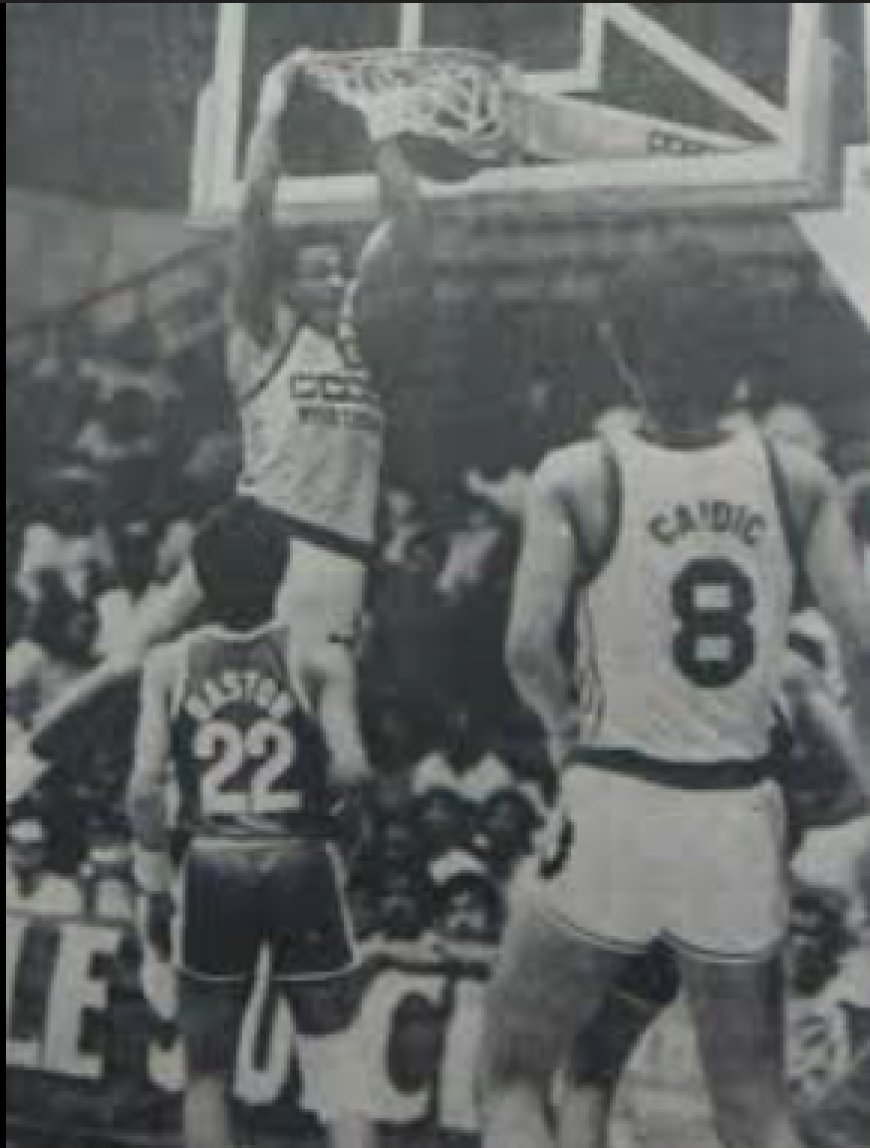
In their final preparation for the ABC, the team then suited up in the 3rd Conference of the 1985 PBA Season, the Reinforced Conference. Since Engelland wasn't eligible for the ABC, Jacobs decided to sit him all throughout the conference, opting for the roster that will play in Kuala Lumpur. The national team showed some dominance, but struggled in some, including a 101-97 debacle against the Robert Jaworski-led Ginebra San Miguel, regarded today as the birth of the never-say-die spirit of the franchise. NCC went on to beat Great Taste, 123-107, in a playoff for the right to meet Manila Beer in the Finals. In the Finals, the nationals authored the most lopsided Finals series win in PBA history over the Brewmasters, sweeping the Lucio Tan franchise, 4-0, with an average of 25.5 points. The team was ready to finally win the ABC tournament last won in 1973 when it was held here in Manila.
The 1986 ABC Conquest
In Kuala Lumpur, Jacobs prepared his wards well. He was wary of China, but was more afraid of South Korea because of its dreaded outside shooting. They swept their first 3 games in the eliminations round, catapulting them to the championship round. They pulled out a 76-72 wringer over the Koreans in their first game in that round, holding off a rally led by Lee Chung Hee and Hur Jae. In their second game, Jacobs gave his bench players more playing time, exerting enough effort to beat the Malaysians, 75-65, while setting up a virtual championship game against the Chinese.
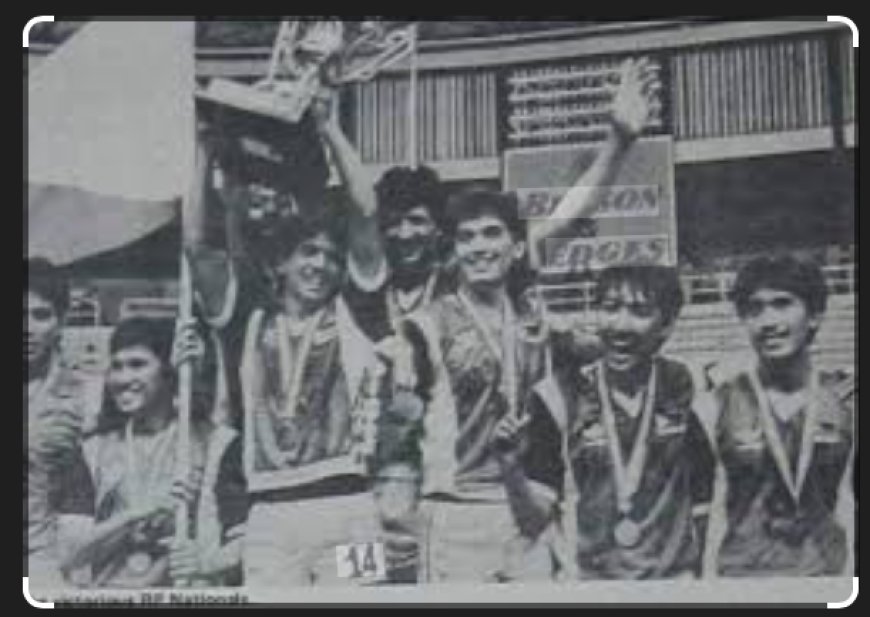
It was in the final game when Jacobs proved to be the antidote against the Chinese. All throughout his career, Jacobs has never lost to China and didn’t want to break this run in the ABC. True enough, Jacobs unleashed the weapon that was perfect against the Chinese’s dreaded matchup zone. Using Still at the high post and Moore roving all over the court, the Philippines relied on its vaunted outside shooting courtesy of Caidic and Lim to smother the Chinese defense, beating their taller rivals, 82-72. Jacobs has succeeded in regaining the Asian crown last won by the country in 1973.
EDSA 1
Political events overtook the country in February of 1986 when the Edsa Revolution broke out, forcing Cojuangco to go on exile. And with the businessman gone, so did the entire NCC program as the BAP opted to discard this instead of providing continuity. The BAP also turned down the opportunity for the team to play in the 1986 FIBA Worlds, the prize won for winning the ABC. That was also the opportunity for the PHL to go up against the likes of David Robinson, Kenny Smith and Rony Seikaly of the US, Arvydas Sabonis and Valeri Tikhonenko of the Soviet Union, and Nikos Galis of Greece, among others. Jacobs, Still, Moore and Engelland all left the country when Cojuangco left for exile.
But when Cojuangco returned and ran for the presidential elections of 1992, Jacobs returned to help his patron. He eventually found his way helping the San Miguel Beer team in the PBA in an unofficial capacity before being appointed head coach of the team in 1997, replacing Norman Black, who moved to Mobiline.
PBA Return
Jacobs returned that saw a decimated SMB lineup that was made up of Nelson Asaytono, oft-injured players Allan Caidic, Bong Alvarez, Samboy Lim and Yves Dignadice, valuable role players Art Dela Cruz and Freddie Abuda, as well as reserves Mike Mustre and Dong Polistico. Jacobs shored up his lineup by bringing in third string point guard Olsen Racela from Purefoods in a surprise move. Racela turned out to be Jacobs’ next Hector Calma, and quickly established himself as one of the most cerebral court generals in PBA history.
Jacobs mentored SMB in the 1997 and 1998 seasons. Despite not having won a single PBA title for that period, he did steer the team to two runner-up finishes while piloting the team to a semifinals appearance in all those 6 conferences. Jacobs utilized the athleticism, skill and strength of Asaytono to lead the team that had mostly role players. And while the lack of talent was glaring, Jacobs masterfully adjusted the game accordingly to conform to his team’s strengths. He slowed down the game considerably, preferring to keep the scores low to give the Beermen a chance to win the game. He had Asaytono as the center of his offense, a far cry from the team concept that he applied with NCC. It was not uncommon to see The Bull score 40 points in a game as Jacobs saw to it that his best offensive weapon is unleashed. From what used to be game scores ending in the 120’s, Jacobs’ emphasis on defense brought down the averages to the 60’s and 70’s.
The temperamental coach was equally particular with the rules of the game. He studied them extensively, and looked for possible loopholes to gain whatever advantage his team can get. He was the reason why the 30-second violation was introduced by the PBA. Prior to this rule, the league had a 30-second injury timeout provision per half that gave the team an opportunity to call a short timeout and check on the injured player. Jacobs took advantage, made his players feign injuries just to call that timeout. Ultimately, after Jaworski, Sr. complained about this, the PBA decided to integrate this as part of the regular timeouts of the teams.
BCAP vs. Jacobs
It was no surprise that Jacobs’ success in 1997, when he was voted Coach of the Year by the Press Corps, led to Commissioner Bernardino’s decision to appoint him as Head Coach of the Centennial Team. But the Basketball Coaches Association of the Philippines (BCAP) balked, brought this to court, and got a favorable decision. Bernardino selected Tim Cone to replace Jacobs, a choice more acceptable for the BCAP. This was also the same BCAP that forced Jacobs to step down as head coach of SMB and give way to his protégé, Uichico, to succeed him. Jacobs was then given the task of running the two SMC teams in the PBA – SMB and Ginebra.
Jacobs started doing consultancy work for Ginebra when Jaworski resigned as head coach at the start of the 1999 season, triggered by the appointment of Alan Caidic as his assistant without the Big J’s knowledge. Rino Salazar was appointed to replace Jaworski but Jacobs’ figure loomed largely in the background. To strengthen the teams, Jacobs brought in the likes of Danny Seigle and Mark Caguioa, negotiated to secure Dorian Pena and Jayjay Helterbrand from the MBA, made the deal that brought Eric Menk, Dondon Hontiveros and Rudy Hatfield to the SMC group, while also “discovering” Jimmy Alapag and Brandon Cablay in the US. In the 2001 All Filipino, Jacobs achieved a hattrick, putting both Ginebra and SMB in the Finals. Bernardino decided to put his foot down and once more appointed Jacobs as head coach of the PHL team that will go to the Busan Asian Games. The BCAP relented.
Preparing for the 2002 Busan Games
With Jacobs finally assuming full responsibility of the national team, he came out with a blueprint where he felt would give the country the best chance of winning the gold medal. Optimism was high as Jacobs, apart from being unbeaten against China and South Korea in international events, was believed by many to be the perfect coach for the national team. Jacobs was given blanket authority to run the team. He formed a pool made up of twenty-four players, twenty three of which came from the PBA with one slot offered to a young Jimmy Alapag who was coming from San Bernardino, California. The PBA secured two sponsors, Selecta and Hapee, and two teams will be formed named after them. Jacobs also requested the PBA to revert to amateur rules for the entire 2002 season, which was approved.
Unfortunately, on December 22, 2001, Jacobs suffered a massive stroke that paralyzed practically his entire body. His departure from the national team also resulted to the drop in optimism for the national team. While Uichico was no slouch as a coach, many believe that Jacobs designed the preparation with an ultimate goal that only he may have knowledge of.
For 14 years, Jacobs fought his battle. He was not just unable to walk, he couldn’t speak as well. And for someone as loquacious and articulate as Jacobs, that may have been difficult for his loved ones.
In all these, Philippine basketball fans marveled at how Jacobs changed the way the game was played in the Philippines. Here’s a list of what he introduced in the Philippines, whether or not this was common elsewhere:
1. Icing the player at the FT line – in pressure situations, Jacobs would call a timeout prior to the opposing player taking a FT to make him think long and hard about the FT’s he was to take. It was a psy-ploy that Jacobs utilized to put pressure on the shooter.
2. The six-point swing – whenever an opponent was to make six consecutive points without reply from his team, Jacobs would sue for time to stop the bleeding. It was a way for him to avoid falling into big leads that could spell victory or defeat.
3. Subbing a player at the last moment – Jacobs was a master at situational ploys. To prevent the opposing coach from making a counter move, he instructed a player coming off the bench during the crucial moments to report to the official’s table at the last minute.
4. Converting the injury timeout to a 30-second timeout – Jacobs was a stickler for details and wanted full control of how his team runs. Timeouts are precious to him which was why injury timeouts were used to allow him to talk to his players. Of course, one of his players would act “injured” in the process.
5. The three point shot as The Great Equalizer – Jacobs described the three point shot as a weapon that should be used particularly by smaller teams. He did this with the PHL, scoring 15 treys in their OT victory against the Golden Eagles of the USA in the 1985 Jones Cup. We have to understand that the 3-pt shot wasn’t frequently used at that time, unlike in today’s game.
6. Jacobs’ coaching tree includes the finest and most successful names in the country today. Coaches like Pilo Pumaren, Derrick Pumaren, Jong Uichico, Siot Tanquincen, Binky Favis, Eric Altamirano, Allan Caidic, Bong Ramos, Pido Jarencio, among others learned their coaching chops from the great teacher himself.
7. An eye for talent – Jacobs knew a talent when he saw one. Calma was a second string PG in the MICAA, playing behind Marte Saldana, before Jacobs took notice. Ultimately, Calma ended up with the more successful basketball career. He was primarily responsible for Danny Ildefonso’s development, as well as the successful careers of Lim, Caidic, Dignadice, Almario and Elmer Reyes.
8. Full court press – PBA teams back then only utilized the press in the final minutes to try to rally and preserving the stamina of the players. When Jacobs came in, the full court press became a regular part of the game which inspired the authorship of Derrick Pumaren of the dreaded “Pumaren Press.” Jacobs knew the value of the press with quick, small men harassing the dribblers and athletic forwards lunging for the interception.
9. Scouting as an integral element – no one took scouting seriously back in the 70’s to early 80’s. What was more important back then was that players were familiar with how their opponents moved. Some enterprising teams like the Toyota franchise had video copies of games they can watch. But with Jacobs, he taught Uichico, Pumaren, Favis and Altamirano how to scout opponents and teach these to the players come practice time. There was no coach more prepared in a PBA basketball game than Jacobs.
10. Working the refs – Sure, Baby Dalupan, Dante Silverio, Caloy Loyzaga and Ed Ocampo had their ways with the referees, getting technical fouls in the process. But Jacobs did this whole game long, focused more on the small things which even the refs would admit they were not used to looking at in the past, while trying to avoid getting called for a T. He didn’t field in his top players in a game for third place against Tanduay, then released them in Game 3 where they pulverized the Rhum Makers in the process. For Jacobs, being seated during the game was a luxury.
Curiously, if we look at all of Jacobs’ achievements, what should come as a shocker is that most of these are still evident in today’s game. Jacobs was practically two decades ahead of his time, compared to his local counterparts. But I’ve always felt that more than the accomplishments and the trophies, Jacobs’ biggest feat was to make both the Filipino player and fan believe once more that they could be Asia’s best, despite the daunting outlook.