The PBA Draft: Its history and how it has come to be
 Jay P. Mercado
The PBA Rookie Draft was put up in 1985 in an unprecedented move to establish parity in the Philippine Basketball Association.
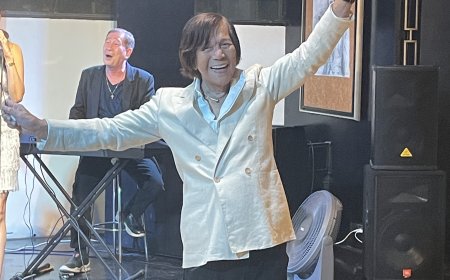
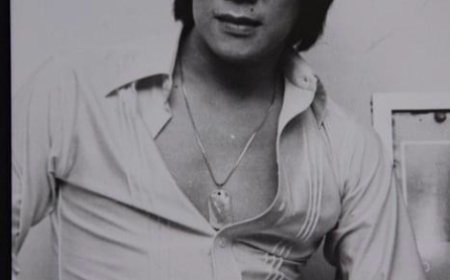
A brainchild of then Deputy Commissioner Tommy Manotoc, the draft was designed to avoid the replication of another Crispa-Toyota duopoly, two franchises that dominated the league on its first decade. In the first 29 conferences of the PBA, the two teams won 22, while ending up runners-up in 6 of the remaining 7.
Manotoc, a former team manager of the Universal Textiles franchise (U/Tex) and head coach of U/Tex, San Miguel Beer and Crispa, knew what he wanted. Having been the mentor of two different teams that had to survive the Crispa-Toyota domination, and later on, leading the Redmanizers to the 1983 grandslam, the young Deputy Commissioner felt that with Crispa and Toyota’s disbandment, the PBA needed to become more balanced and exciting. He envisioned a league when teams get to play against one another with fans having difficulty predicting the final result of the games.
How this came about
Parity has never been the strongest suit of the PBA in its early years. Crispa and Toyota dominated the league by making sure they get the top players in the amateur ranks. Even in the MICAA, the Redmanizers and the Comets were the established elite teams, having faced each other in the 1973 and 1974 finals.
As such, when the PBA opened on April 9, 1975, these two teams brought their top players to continue their reign. Toyota won the first 2 conferences of the PBA, Crispa then went on to win 6 consecutive titles. In the first six conference finals, these two teams duked it out for the title, establishing a rivalry that remains unparalleled and unequaled.
The only times when the two teams failed to win the championship, it was through the benefit of import handicapping. Pioneer commissioner Leo Prieto, aware of the need to balance the competition, came up with a concept where the top teams will be handicapped with their imports. The top two teams of the same Open conference the previous year, would be allowed to hire two imports of unlimited height but will only play one at a time. The mid-tier teams were allowed to suit up two imports, one at unlimited height and another no taller than 6’6, but can play together on the court. The bottom 2 to 4 teams will be allowed to field in simultaneously two imports with no height handicap.
Even in the All-Filipino conferences, the bottom two teams were allowed to suit up the PBA’s resident imports in Billy Robinson and Cisco Oliver. Robinson powered Mariwasa-Honda to the finals of the 1977 All Flipino, losing to Crispa, 3-1. He returned the succeeding year to play for Filmanbank and towed the team to the finals again, losing to Toyota this time, 3-1. Oliver suited up for Presto / Great Taste and Honda but failed to lead his teams to the finals.
Because of this, U/Tex became the first team outside Crispa and Toyota to win a PBA title. This was in the 1978 PBA Open Conference when they paraded a 6’9 Byron “Snake” Jones and a 6’6 Glenn McDonald playing simultaneously to sweep Crispa in the finals, 3-0. The Redmanizers had the 6’9 Ansley Truitt and the 6’8 Paul Mills as reinforcements who can’t play at the same time.
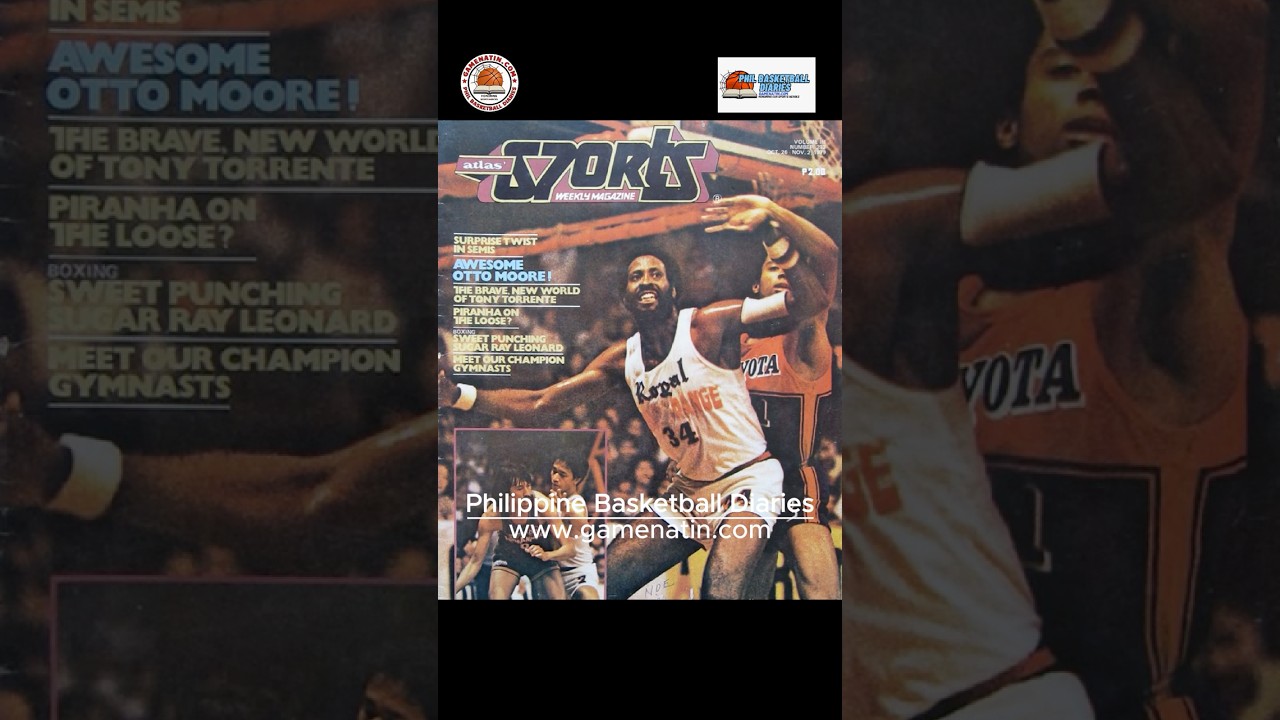
Royal Tru Orange also benefited from this, winning the succeeding year’s Open Conference against Toyota, 3—1. Powered by the 6’11 Otto Moore and the 6’7 Larry Pounds, they dethroned the Tamaraws who were led by imports Bruce “Sky” King and Andy Fields. King and Fields were disallowed to play together while Moore and Pounds took charge of the Orangemen on both ends of the court.
In 1980, Manotoc pulled another coup, winning the Open Conference with the 6’8 former NBA player, Aaron James, and McDonald playing together. They beat Toyota, 3-2, in a memorable series. The Tamaraws brought back King and Fields who had to settle for relieving one another.
And then, in the 1982 Invitationals, Manotoc, who moved to San Miguel (formerly RTO) already, led his charges to a 2-1 finals win against the Redmanizers. SMB had the 6’5 Norman Black going up against the 6’1 Glenn Hagan of Crispa. This rule came about when the league ushered in the Reinforced Conference in 1981, with the top 2 teams being allowed imports no taller than 6’1, the mid-tier teams at 6’3 or below, and the lowly teams at a maximum ceiling of 6’5. The Beermen took advantage, using Black’s do-it-all mindset, in fashioning out their second franchise title.
Manotoc with Crispa
What made Manotoc understand the need for balanced competition was because of his experience to be on both sides. After 6 years of handling the Wranglers and the Beermen, struggling to get past the duopoly, he found himself now part of the dynastic Crispa team. True enough, on his first year with the franchise, he carried the team to a dominant grandslam title, unarguably still the greatest performance of a PBA franchise in one season.
Not only did Manotoc benefit from one of the strongest rosters ever assembled, he also was able to bring in perhaps the greatest import in PBA history that year – Billy Ray Bates. Partnered with, initially, the 6’9 DeWayne Jay Scales, who was later replaced by the more defensive-minded 6’10 Larry Demic – the Redmanizers established a PBA record of 21 straight victories bridging two conferences. They swept Gilbey’s Gin in the All Flipino, 3-0, had some problems in the Reinforced Conference against Great Taste, led by Black, Ricardo Brown and Bogs Adornado, winning, 3-2, and then sweeping the Coffeemakers, 3-0 in the Open Conference.
Named Deputy Commissioner
Manotoc resigned as Crispa’s head coach in the semifinals of the 1984 All Filipino Conference, turning over the reins to his trusted assistant, Narciso Bernardo. He was later appointed that year as Deputy Commissioner to backstop new PBA Commissioner Mariano Yenko, a retired former colonel of the military. With his basketball background and expertise, Manotoc shaped up to be the brains and brawn of the Commissioner’s office. He enforced several changes in the league rules, one of which was the very popular and well-accepted “no harm, no foul” rule.
But his primary vision was to establish parity by “spreading the wealth” to all teams. When Crispa disbanded at the end of the 1985 season, this was his best opportunity to achieve his dream.
He initiated the sale of Crispa’s franchise by enticing Formula Shell to join the PBA in 1985. But unlike previous franchise sales, Manotoc only allowed Shell to bring in 4 of Crispa’s players to their roster, while distributing the other 8. The Azodrin Bugbusters opted to secure the services of Philip Cezar, Bernie Fabiosa, Bay Cristobal and Willie Pearson (who was later traded to Great Taste for Bogs Adornado). Atoy Co, Yoyoy Villamin and Fritz Gaston went to Manila Beer. Tanduay Rhum snagged Abet Guidaben, Freddie Hubalde and Padim Israel. Tito Varela later joined the Rhum Makers, Jimmy Javier donned Shell’s jersey midway into the season, while Lim Eng Beng retired and then joined Manila Beer in 1986.
Manotoc was also responsible for Adornado not being able to join Ginebra San Miguel in the 1985 season. The sweet-shooting forward was about to sign a contract with the La Tondeña franchise at the PBA office when a phone call from Manotoc stopped the transaction. Adornado would later find himself being traded to Shell for Pearson. In an interview on the sports podcast, “An Eternity of Basketball,” Adornado said that Manotoc didn’t allow him to join Ginebra because “the PBA cannot afford to have two superstars in one team.” He was obviously referring to what would have been an explosive partnership between Adornado and Robert Jaworski, the newly-installed Ginebra playing coach.
With the parity seeds put into place, Manotoc was contented with how the first season without Crispa and Toyota performed. While Great Taste dominated the 1985 season with two of three championships, the amateur guest national team, NCC, under Ron Jacobs copped the season-ending Reinforced Conference title. Notably, all 6 PBA teams ended up in the semifinals at least once for the season. This was a stark improvement from the previous seasons – and it was evident that the results were becoming less predictable.
Conceptualizing the Draft
But while Manotoc succeeded in distributing the Crispa talents to different teams, this was only a short-term solution. What the young presidential son-in-law wanted was a long-lasting solution that will allow continuity as far as roster balance.
Taking a look at how the NBA does this, he took a long, hard look at how the NBA Draft was done. Just around this time, Magic Johnson and James Worthy became top first picks who led the Lakers to 5 championships in the 80’s. Ralph Sampson and Hakeem Olajuwon made the Houston Rockets contenders once more after losing Moses Malone to the Philadelphia 76ers.
It was evident that there were rookies who were good enough to turn a moribund franchise around. Armed with this belief, Manotoc established the PBA Rookie Draft in February, 1985. Expansion team, Shell, was given the right to first pick in the draft, selecting 6’5 center, Sonny Cabatu. Manotoc then ranked the drafting sequence based on the ranking order of the previous season, with the last placers selecting first. Tanduay brought in former national player Onchie Dela Cruz, while Magnolia Ice Cream strengthened their frontline by drafting former RP Youth big man, Teddy Alfarero. Manila Beer, drafting 4th overall, selected Noni Robles while Ginebra San Miguel decided to secure Rey Perez. Great Taste, the top team of the 1984 season, drafted last in the first round and opted for Leo Isaac. Isaac, though, didn’t sign with the Coffeemakers and became a free agent. A year after, Ginebra hired him to beef up their backcourt.
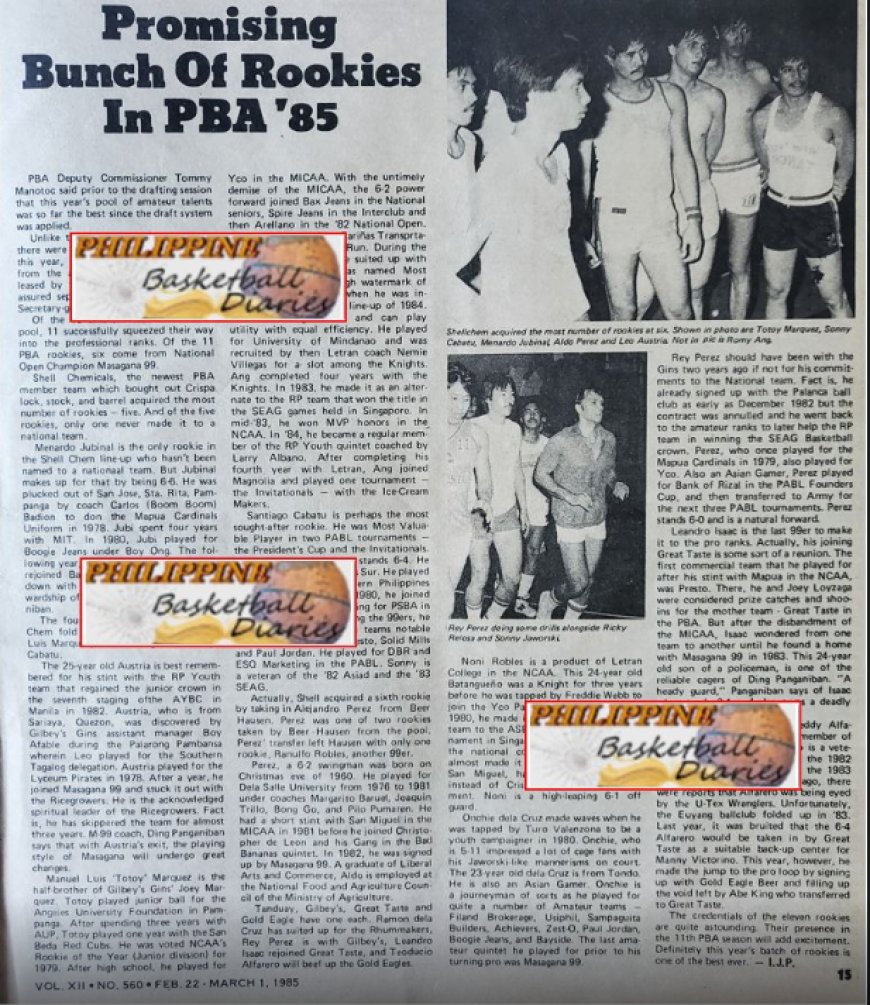
In the second round, following the same draft sequence, Shell brought in shifty guard Romy Ang from Letran as the 7th overall pick. Tanduay and Magnolia passed, while Manila Beer took in Aldo Perez as the 8th pick. Ginebra and Great Taste similarly passed, leaving Shell to pick up Menardo Jubinal, Leo Austria and Totoy Marquez. Perez, who was left unsigned by the Brewmasters, eventually joined the Bugbusters. To complete Shell’s lineup, coach Freddie Webb hired free agents Rey Lazaro and Dennis Abbatuan from Tanduay.
Eight players were left undrafted – these were former RP Team player Tem Gancayco, Jerome Cueto, Ramon Aquino, Ramon Cui, Jay Ramirez, Lawrence Merced and Ramon Samson. Ramirez and Merced eventually got to join the PBA – suiting up for Shell and Great Taste, respectively.
Successful drafts
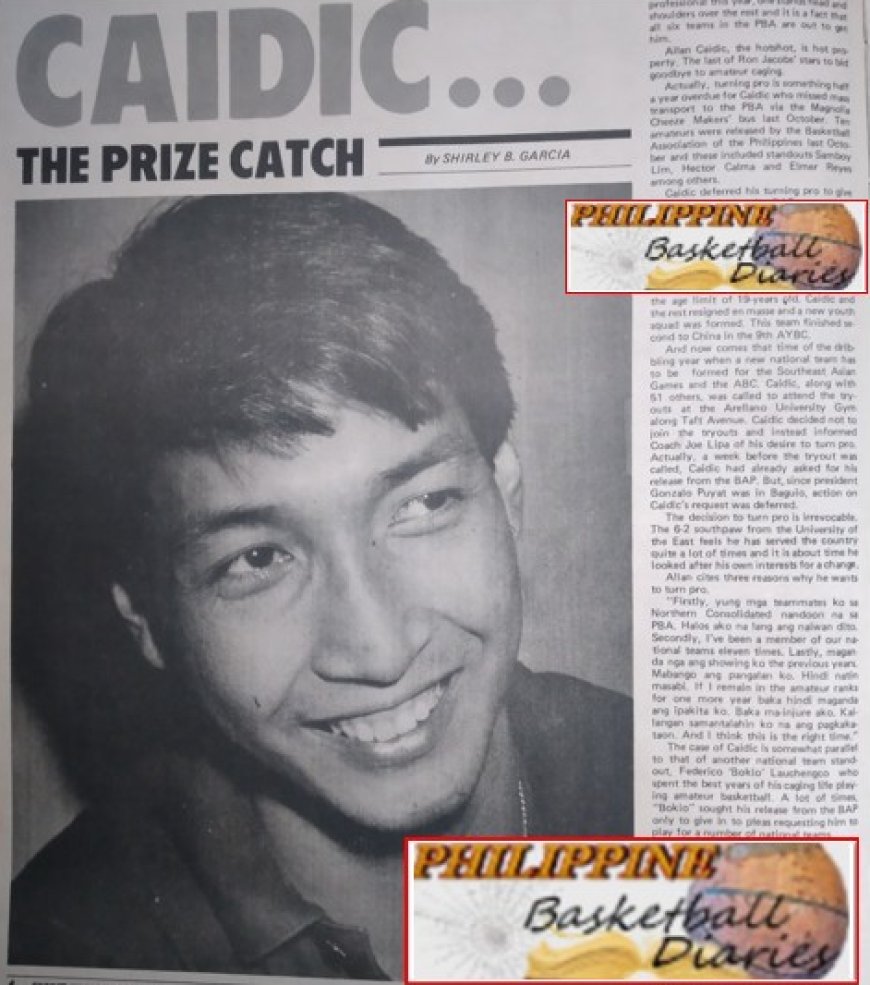
The success of the PBA draft cannot be understated. In 1987, Alan Caidic became the top draft pick through shrewd trade maneuverings by Great Taste. The Coffeemakers collared him and the Gokongwei franchise won the All Filipino title that year. Caidic eventually became only the third rookie in PBA history to earn a slot in the Mythical Five.
But it was in 1989 which yielded the biggest success. With Shell languishing in the cellar of the 1988 All Filipino conference, they were in dire need of a big man to strengthen their frontline. Benjie Paras, the sensational star who led the UP Maroons to the 1986 UAAP title and Phillips Sardines to the 1988 PABL championship, was then a 20-year old with a phenomenal future ahead of him. Shell didn’t even think twice in drafting him as the top overall pick of 1989, teaming himself up once more with fellow UP cog, Ronnie Magsanoc.
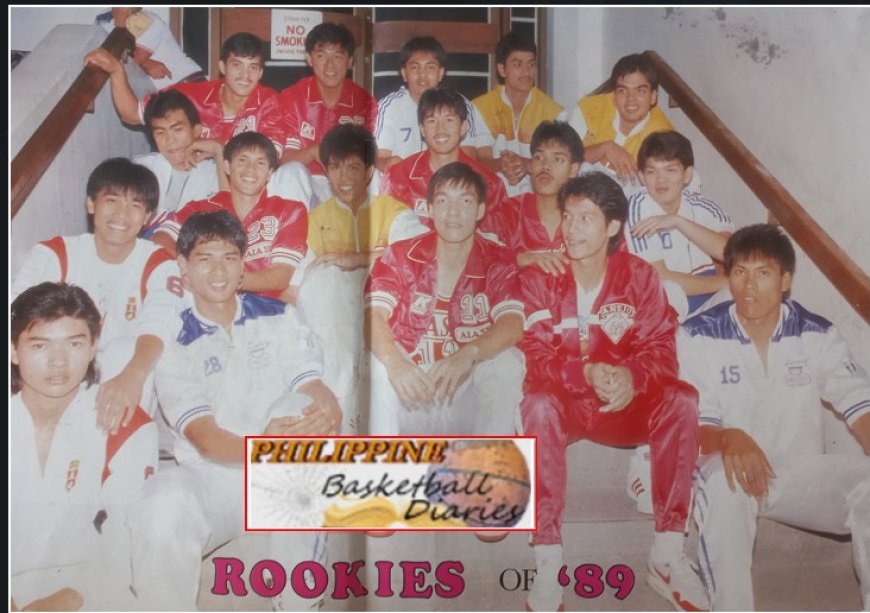
Paras’ entry made Shell an elite team overnight. They copped second place in the Open Conference and third in the All Filipino. Paras then was voted as the very first rookie MVP in the PBA, a recognition that has yet to be replicated. More importantly, his presence made Shell a perennial championship contender every year, winning a championship in the 1990 First Conference while placing runner-up to Ginebra in the 1991 First Conference.
Another noted turnaround was Marlou Aquino’s entry to Ginebra San Miguel in the 1996 season. After three consecutive seasons of not being able to make it past the elimination round, Ginebra finally found the opportunity to secure a big man in the 6’9 Aquino. Drafting first in the 1996 draft, the Gins took in Aquino who would lead the franchise to the finals of the 1996 Governors’ Cup, losing out to the grandslam-seeking Alaska Milkmen, 4-1. Aquino was rewarded with the Rookie of the Year honors and the 5th rookie to make it to the PBA Mythical First Team. Ginebra eventually won a title with Aquino spearheading the charge in the 1997 Commissioner’s Cup.
More big names followed – Danny Ildefonso and Junemar Fajardo of San Miguel Beer, and Kelly Williams of Sta. Lucia Realtors – all three players making their respective franchises better. Even last year’s top pick, Stephen Holt, has given a fresh lease of life for the Terrafirma Dyip team, helping them earn a quarterfinals slot in the recent 2023-24 Philippine Cup.
Which is why it is saddening that the PBA Draft today is not enforced based on the spirit of why it came to be. When you see 12 of the last 14 top picks ending up with either the SMC or MPIC conglomerates, one begins to wonder if parity is indeed the ultimate objective of the Draft.