Six great PBA teams - what happened to them?
 Jay P. Mercado

San Miguel holds the record for being the longest-tenured franchise in the PBA, having been around since 1975 while only taking a leave of absence in the first 2 conferences of the 1986 season.
Not surprising really since SMC remains to be one of the biggest conglomerates in the country. It has at least three franchises in the PBA, a testament to its support to the league.
Too bad not all teams are as financially flexible as SMC. While the PBA has proven to be an excellent marketing vehicle for the different brands, this doesn’t guarantee revenues resulting to continued tenure. The most successful franchises in the PBA have folded up for one reason or another.
Let’s list these teams down:
1. Crispa Redmanizers (1975-1984; 13 titles)

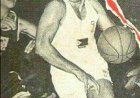
The most successful franchise in league history, bar none. While SMB, Ginebra, Alaska and Purefoods may have won more titles, Crispa won these in fewer seasons. Add to this its twin grandslam feats in 1976 and 1983, a feat no other team has yet to match. The textile company has been in the basketball scene since 1956, playing in the BAA and later, the MICAA, but the company suffered in the 1983 economic crisis. The setback forced the Floro family to sell its franchise to Pilipinas Shell in 1985. The players were evenly distributed to different teams, as mandated by then Deputy Commissioner and former Crispa coach Tommy Manotoc, to ensure league parity. There were attempts for Crispa to return to the PBA in the late 80’s and early 90’s but this never came to fruition.
2. Toyota Silver Coronas (1975-1983; 9 titles)

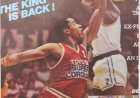
You wonder how a huge global brand like Toyota would encounter financial difficulties when it remains to be the top car brand in the world. Because of the 1983 economic collapse, imported brands suffered the biggest hit because of the exchange rate. Previous to that, the 1981 Dewey Dee caper hit several businesses, including the local distributor of the car brand. Toyota, whose local rights were owned by Delta Motors Philippines of the Silverio family, couldn’t manage to maintain its PBA franchise, selling the team to Basic Holdings, Inc., a Lucio Tan company that also owned Asia Brewery, Inc., Fortune Tobacco, among many others. Toyota was Crispa’s arch rival, and the other half of the league’s reason why it was successful in the 70’s and early 80’s. The disbandment caused an uproar that led to a major feud between Robert Jaworski, Sr. and Ramon Fernandez. With Basic Holdings owning the rights to the players, Jaworski and best buddy, Francis Arnaiz, didn’t honor this deal, allowing Carlos “Honeyboy” Palanca, III of La Tondeña Distillers, Inc. (LTDI) to secure the rights of the Big J and Mr. Clutch and play for Gilbey’s Gin (later Ginebra). Ginebra went on to become the most popular team in the PBA for three decades and counting.
3. Presto / Great Taste Discoverers (1975-1992; 6 titles)

While some teams disband because of financial difficulties, the case didn’t apply with Presto, a team owned by business tycoon John Gokongwei. Another pioneer team in the PBA, debuting with the company name, Consolidated Foods Corporation (CFC), the team didn’t fare well in the first 8 seasons, and was often at the cellar. The direction changed in 1983 though when the team acquired Ricardo Brown as a rookie, secured Bogs Adornado from the disbanded U/Tex team, and hired Norman Black as their import. Suddenly, the team became an instant Finals contender, placing second twice to Crispa that year. The breakthrough season came the year after when they won 4 consecutive championships starting from the 2nd conference of the 1984 season up to the 2nd conference of 1985. This team will be known as the first home of Brown and Allan Caidic and the haven of Crispa and Toyota veterans like Abe King, Philip Cezar, Atoy Co, Arnie Tuadles, Chito Loyzaga, Bernie Fabiosa, among others. They eventually sold their franchise to the Sta. Lucia Realtors after a dismal 1992 season where it won only 11 of their 40 games.
4. Swift Mighty Meaty / Sunkist (1990-2001; 4 titles)

When Republic Flour Mills (RFM) joined the PBA in 1990, they just bought Cosmos Bottling Corporation and was to re-introduce this to the market. A multi-media marketing campaign was launched, including the formation of its basketball team called Diet Sarsi Sizzlers. The team had genuine success, winning 4 championships, 2 of these with now Rain or Shine mentor Yeng Guiao as head coach. The team nearly won a grandslam in 1995 under Coach Derrick Pumaren only to lose out in the semifinals of the 3rd Conference. The team was known for assembling one of the most talented local lineups ever – the likes of Vergel Meneses, Nelson Asaytono, Al Solis, Rudy Distrito, Zaldy Realubit, Bonel Balingit, Yoyoy Villamin, Ric Ric Marata, Boybits Victoria, Eric Reyes and Kenneth Duremdes once played for this team in 1995. By the end of the 2001 season, the Coca-Cola Group, then owned by the San Miguel conglomerate, decided to expand its operations by acquiring the Cosmos Group from the Concepcion family, including its PBA franchise.
5. Formula Shell Turbo Chargers (1985–2005; 4 titles)

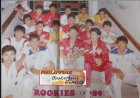
When the multinational fuel company Royal Dutch Shell decided to join the PBA in 1985, they were buying the fabled Crispa franchise that could have retained its dynasty. Interesting though the league decided to separate the Crispa stars, unlike what it did the year before with Toyota. Those who were retained included 1980 MVP Philip Cezar, Bay Cristobal, spitfire Bernie Fabiosa and big man Jimmy Javier. Shell was always a competitive team, but their legacy was built when they secured Benjie Paras as the top rookie pick of 1989. Paras, who went on to become the first freshman to win the MVP title, was the face of the team for more than a decade and was instrumental in giving the team all its 4 championships. As their fortunes faded with Paras’ departure, top management decided to end their PBA campaign, opting to focus its marketing campaign through different platforms. The company that owns the Rain or Shine paint brand eventually bought the Shell franchise in 2006.
6. Tanduay Rhum Makers / Masters (1975-1987; 3 titles, and 1999-2001)

One of the pioneer teams in the PBA, Tanduay’s celebrated roots trace itself back to the glorious YCO days of the 1960’s. One of the more popular teams in the PBA not named Crispa and Toyota, Tanduay was part of a mid-tier group made up of U/Tex and San Miguel (Royal Tru Orange) in the 70’s and early 80’s. They were good enough to place runner-up to Toyota in the 1978 Invitational, but only found the right formula when they got Ramon Fernandez in a celebrated swap with Abet Guidaben and Manila Beer, missing the grandslam in 1986 and winning another title in 1987.
News came out of a consumer who died allegedly of poisoning by drinking the brand and the company sales plummeted, forcing the Elizalde company to sell its franchise to the Ayala Group that carried the Purefoods brand. Tanduay, the brand, was also sold to the Lucio Tan Group, who later, rejoined the PBA as an expansion team in 1999. It became a contender from the start as they brought along amateur stars Eric Menk, Mark Telan, Chris Cantonjos, Jomer Rubi, Alvin Magpantay Rene Alforque and Derrick Bughao while being reinforced by veterans Pido Jarencio, Jason Webb, Bobby Jose and Jayvee Gayoso. They also plucked Sonny Alvarado from the rookie draft, strengthening its lineup that took them all the way to the Finals on their very first conference. They didn’t stay long though as controversies piled up for this franchise and management felt that they weren’t getting a fair shake from the league, alleging that the PBA favors its corporate rival, SMC. A firesale of its key players (Menk, Rudy Hatfield, Dondon Hontiveros, Jeffrey Cariaso) took place prior to its franchise sale to FedEx Philippines worth a little bit over P100M.
Six successful PBA teams that didn’t last in the PBA for different reasons. While teams come and go, the PBA has stayed on and retained its relevance after 48 years. A proud accomplishment indeed…